Redriff
Redriff (the historical Rotherhithe, then a village on the Thames, now part of London) is the fixed domestic point in Lemuel Gulliver's life, the place he returns to between voyages and the home from which he sets out on his final journey. It is the setting for the most intimate evidence of his psychological transformation: after two years among the giants of Brobdingnag, he returns to Redriff unable to perceive his own family as full-sized human beings, stooping to enter his own door "like a goose under a gate" and kneeling to let his wife reach his mouth. The village also anchors the book's claim to veracity, for Gulliver's neighbors at Redriff were so convinced of his truthfulness that "it became a sort of proverb among them, when any one affirmed a thing, to say it was as true as if Mr. Gulliver had spoken it."
Location and Domestic Life
Gulliver first settles in Redriff after his early voyages, taking a house there after moving from the Old Jewry and then from Fetter Lane in London. It is from Redriff that he departs on the "Antelope" in 1699, the voyage that leads to Lilliput. After his return from Lilliput and Blefuscu, he stays only two months with his wife and family in Redriff before his "insatiable desire of seeing foreign countries" drives him to sea again. He leaves his wife fifteen hundred pounds and settles her in "a good house at Redriff" before embarking on the "Adventure" for Surat, the voyage that will strand him in Brobdingnag. The house thus functions as the material base of his domestic identity—the place where his wife, son Johnny, and daughter Betty live—and the point of contrast for every alien world he encounters.
The Proverb of Truthfulness
Gulliver's reputation for veracity is so firmly established among his Redriff neighbors that his name becomes a local byword for honesty. The publisher Richard Sympson records that "it became a sort of proverb among his neighbors at Redriff, when any one affirmed a thing, to say it was as true as if Mr. Gulliver had spoken it." This reputation is the narrative's first and most important claim to credibility, and it is rooted in the specific social world of Redriff, not in any abstract philosophical principle. The proverb is invoked before any of the fantastic voyages are described, establishing a frame of trust that the book's satirical content will later test to its breaking point.
The Return and Psychological Disorientation
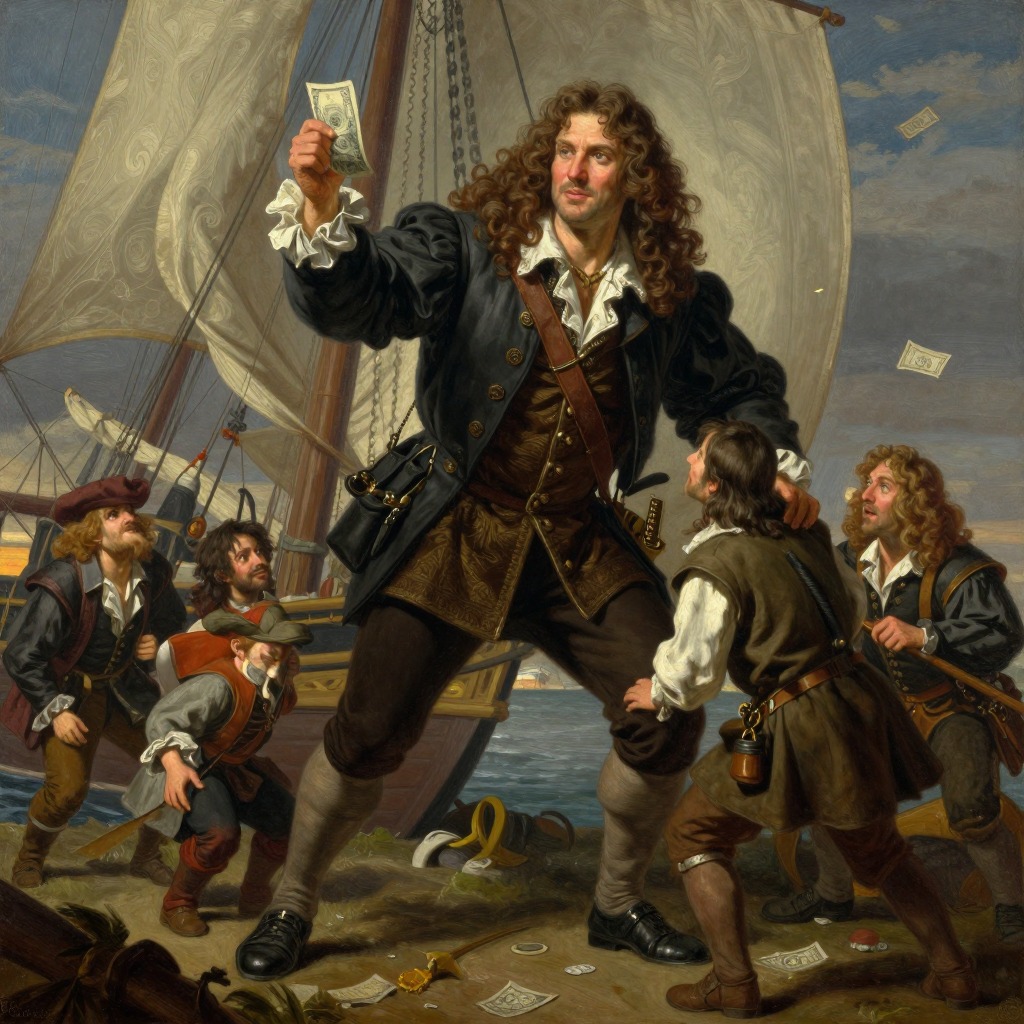
Gulliver's return to Redriff after Brobdingnag is the most vivid demonstration of the cognitive aftereffects of his travels. When he arrives at his own house, he is forced to inquire for it, and then bends down to enter for fear of striking his head. His wife runs out to embrace him, but he stoops "lower than her knees, thinking she could otherwise never be able to reach my mouth." His daughter kneels to ask his blessing, but he cannot see her until she rises, having been so long used to standing with his head and eyes erect to above sixty feet. He then tries to take her up with one hand by the waist. He looks down upon the servants and friends in the house "as if they had been pygmies, and I a giant," and tells his wife she has starved herself and her daughter "to nothing." His behavior is so unaccountable that everyone in the house concludes he has lost his wits. This passage, which Gulliver himself offers as "an instance of the great power of habit and prejudice," transforms Redriff from a mere geographical location into the stage for the book's most poignant demonstration of how profoundly experience can reshape perception.
The Final Departure
Despite his wife's protests—she "protested I should never go to sea any more"—Gulliver's "evil destiny" orders otherwise, and he leaves Redriff again. The house remains the fixed point he cannot stay in, the domestic center that his restless nature perpetually abandons. Redriff is thus not merely a setting but a structural element of the narrative: it is the ordinary world that makes the extraordinary worlds legible, the home that gives the word "return" its meaning, and the place where the cost of those returns—the permanent alteration of the traveler's mind—is most starkly visible.